Sunday, February 19, 2012

Oops-Steve Jobs did not Grow Up in an Eichler Home After All

According to Walter Isaacson's recently published biography of Steve Jobs, Jobs said that he grew up in an Eichler Home. However, my father says that this is not true. While the home in question was designed by architects (Anshen and Allen) who did some of the designs for Eichler Homes, it was a built by a builder named Mackay Homes, which wanted to build something similar to Eichlers, but with a "softer" look. My father should know, since he was the sales manager for Eichler Homes during its heydey. However, Steve Wozniak did indeed grow up in an Eichler.

This article in California Modern tells the whole story: "Jobs’ ‘Likeler’ Is No Eichler"

Tuesday, February 14, 2012

Group Exhibition Announcement

I will be participating in a group exhibition, curated by Robert Becker, and hosted by the San Francisco chapter of the American Institute of Architects and the Center for Architecture and Design. The exhibition will run from February 16 through April 26, 2012. See the link below for more information.

Presenting Architecture @ AIASF and Center for Architecture + Design

Sunday, February 12, 2012

947 Van Auken Circle-Palo Alto Eichler Home for Sale

Here is an image I shot for a recent real estate listing for an Eichler home in Palo Alto.


This became a pending sale in under 2 weeks.  Here is the website for the property: www.947vanauken.com.

Monday, January 30, 2012

David Adler: Architectural Works

For those who might be interested in the work of the architect David Adler (see my previous blog post about the Tobin Clark Estate), I just discovered this book, edited by Martha Thorne (Associate Curator, Department of Architecture, Art Institute of Chicago), and published by the Yale University Press: David Adler, Architect

Unfortunately, the book is currently out of print

Thursday, January 12, 2012

The Tobin-Clark Estate-Hillsborough, CA

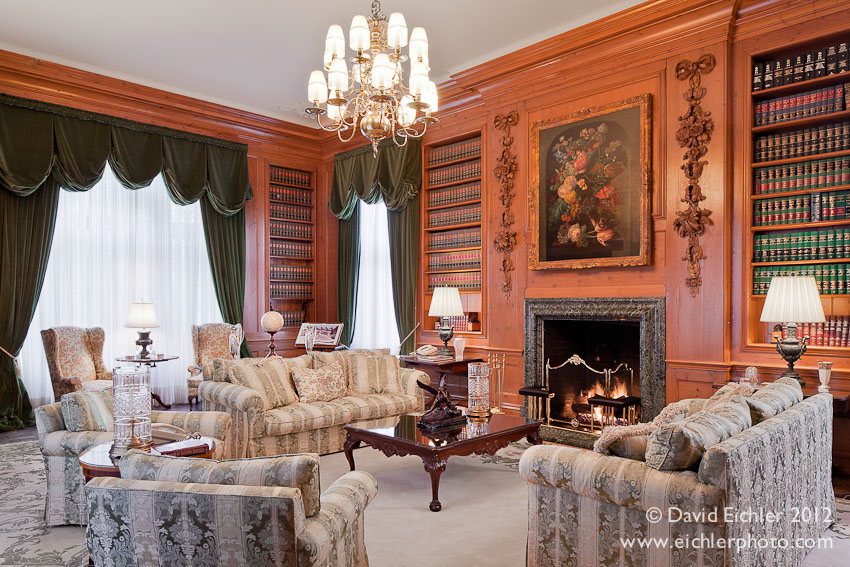
I recently had an opportunity to create marketing photos for the real estate listing of a large, historic estate in Hillsborough, CA, at 40 Verbalee Lane.  Known as the Tobin-Clark estate, it was built around 1930 and was designed in the Tudor style by the noted architect David Adler. The mansion is approximately 32,000sf, and the estate is approximately 6 acres. My clients were Randy Eyler and Pat Briscoe of Alain Pinel Realtors. Here are some highlights.


Front Elevation
Rear Elevation
Side Elevation
Rear Exterior
Pool


Solarium

Music (Living) Room


Dining Room
Foyer
Library
Office


In terms of the process, this was not a typical real estate photography shoot. Due to the size of the property and the desire for more consistently high quality from image to image than for normal real estate photography, I shot this over two days to deliver 22 images, and I used an assistant for the day I spent shooting the interiors, to help move equipment, furniture and decor. Normally, for real estate photography, I will spend approximately 1.5 to 4 hours at a property (depending upon the size of the property and the number of images I am to deliver), without an assistant, to create somewhere between 12 and 25 images. Aside from allowing me more time to light and arrange the interiors, the more involved process allows me more time to shoot all of the scenes when the ambient lighting is more favorable, since no part of a building that receives any significant amount of ambient daylight will have good daylight at all parts of the day. Even though I have the capability to use supplementary lighting, I generally prefer to use as much of the ambient lighting as I can, if that lighting is of reasonably high quality. I would also like to point out that high quality ambient lighting does not necessarily mean bright lighting. I can sometimes create high quality photos in very low-light conditions, without any supplementary lighting, as long as the basic quality of the ambient lighting is good.

I also spent more time processing and retouching some of the images than I would for a normal real estate photography job. Overall, this job was closer to what I would do for an architect or interior designer.

Wednesday, December 28, 2011

Enhance Your Internet Viewing Experience: Calibrate your Computer Monitor

The management of color for digital photography is an extremely complex subject, of which most amateur photographers have little or no understanding. Basically, color management has to do with the whole process of color digital photography, including how photos are processed and viewed. For most amateur photographers, a thorough understanding and application of this process is not practical. However, there is one part of the process that could be practical for non-professionals and would greatly serve the medium of digital photography: calibration of computer monitors. 

The brightness and color rendition of computer monitors changes over time, and the stock monitor brightness and color/contrast monitor settings are generally not ideal for viewing photographic images. Furthermore, the ambient lighting conditions under which a monitor is viewed will have an effect on the viewer's perception of the image (applies to viewing printed images as well). Conscientious professional photographers will calibrate their computer monitors with special software and hardware that enables them to achieve a more consistent and accurate view of photos on their monitors. This specialized software and hardware is not necessarily terribly expensive (although more elaborate and versatile versions can be), nor is it difficult to use for someone who is at least moderately comfortable with installing and using various kinds of computer software.  Here are a couple of examples of monitor calibration tools that are reasonably accessible for the average computer user: Colormunki and Pantone Huey.  Both of these products can be had for under $200.

Ideally, for best viewing of images, the monitor calibration should take into account the nature of the ambient room light. However, even calibrating a monitor without regard to the ambient room lighting can make for a much more accurate photo viewing experience than simply using the stock monitor settings, or, even worse, badly manipulated monitor settings.

Some professional photographers will occasionally go to the extent of calibrating their clients' monitors. However, this is not practical in all cases. Furthermore, serious photographers are interested in disseminating their work to the widest possible audience, in a manner that represents their work as accurately as possible. Since the Internet has now become the preeminent medium for viewing photographs, it makes sense to try to ensure that the photo viewing medium enables viewers to have the best possible viewing experience.